Foam-core motorcycle contest
In this two-week studio project, our team was challenged to design and construct a full-scale motorcycle inspired by the Art Nouveau movement using only lightweight materials such as foam, cardboard, and tape. I contributed across multiple stages from concept generation and physical prototyping to hands-on construction and user testing, ensuring the design not only reflected our theme but could also function and be demonstrated effectively.
Year :
2025
Industry :
Industrial Design /
UX Design
Team Size :
6 Members
Project Duration :
2 weeks
The Challenge :
How might we express the organic curves and elegance of Art Nouveau through the design of a motorcycle using only lightweight, low-cost materials, ensuring it remains functional and visually coherent?
Ideation & Concept Development
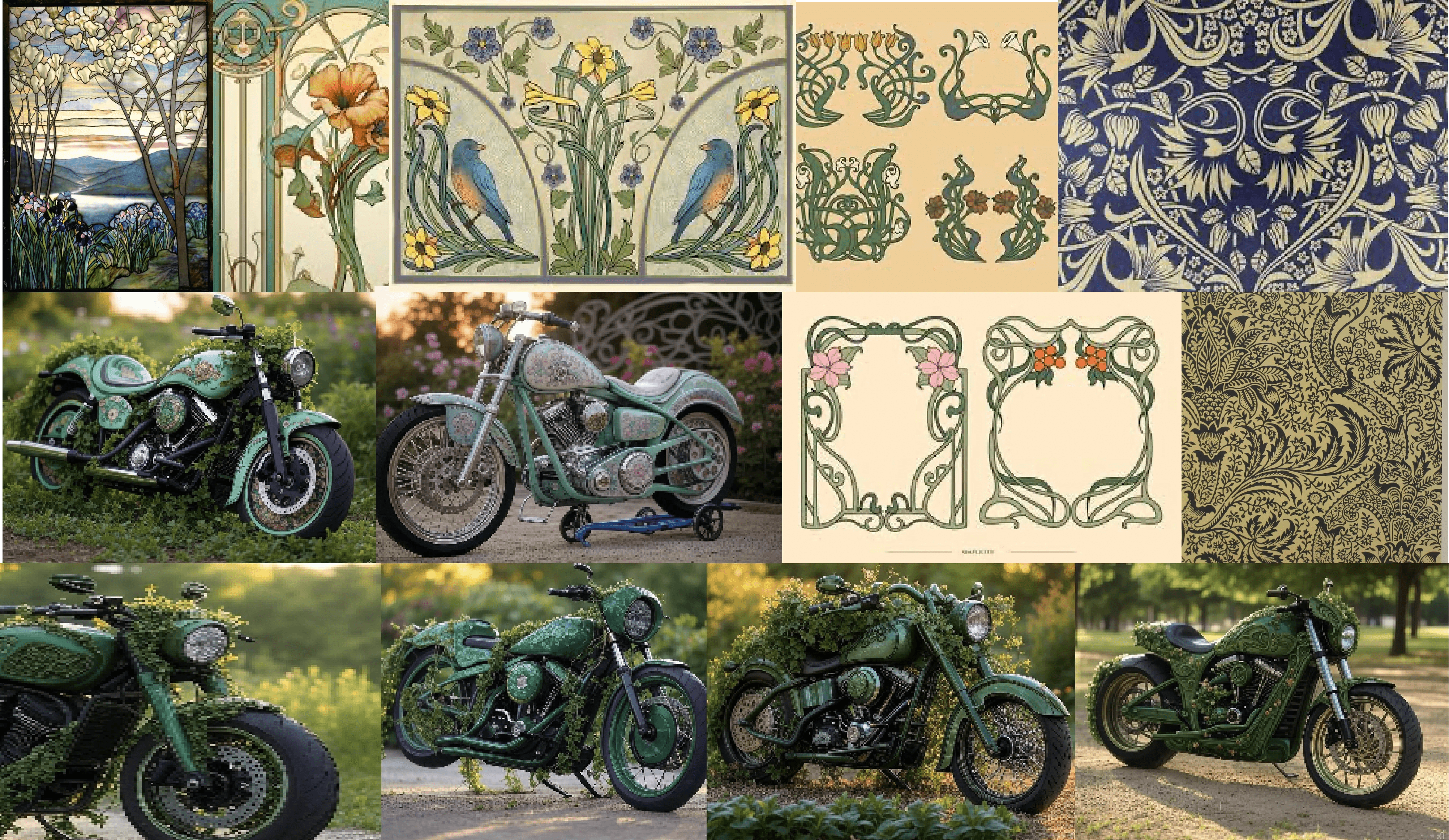
Used AI image generation tools (like Grok, GBT, Midjourney) to explore early design directions and aesthetic references. By feeding prompts related to “Art Nouveau curves, motorcycles, foam core, flowing structure,” we quickly created moodboards and visual mock-ups that helped the team align on the desired look and feel.
CAD & 3D Prototype
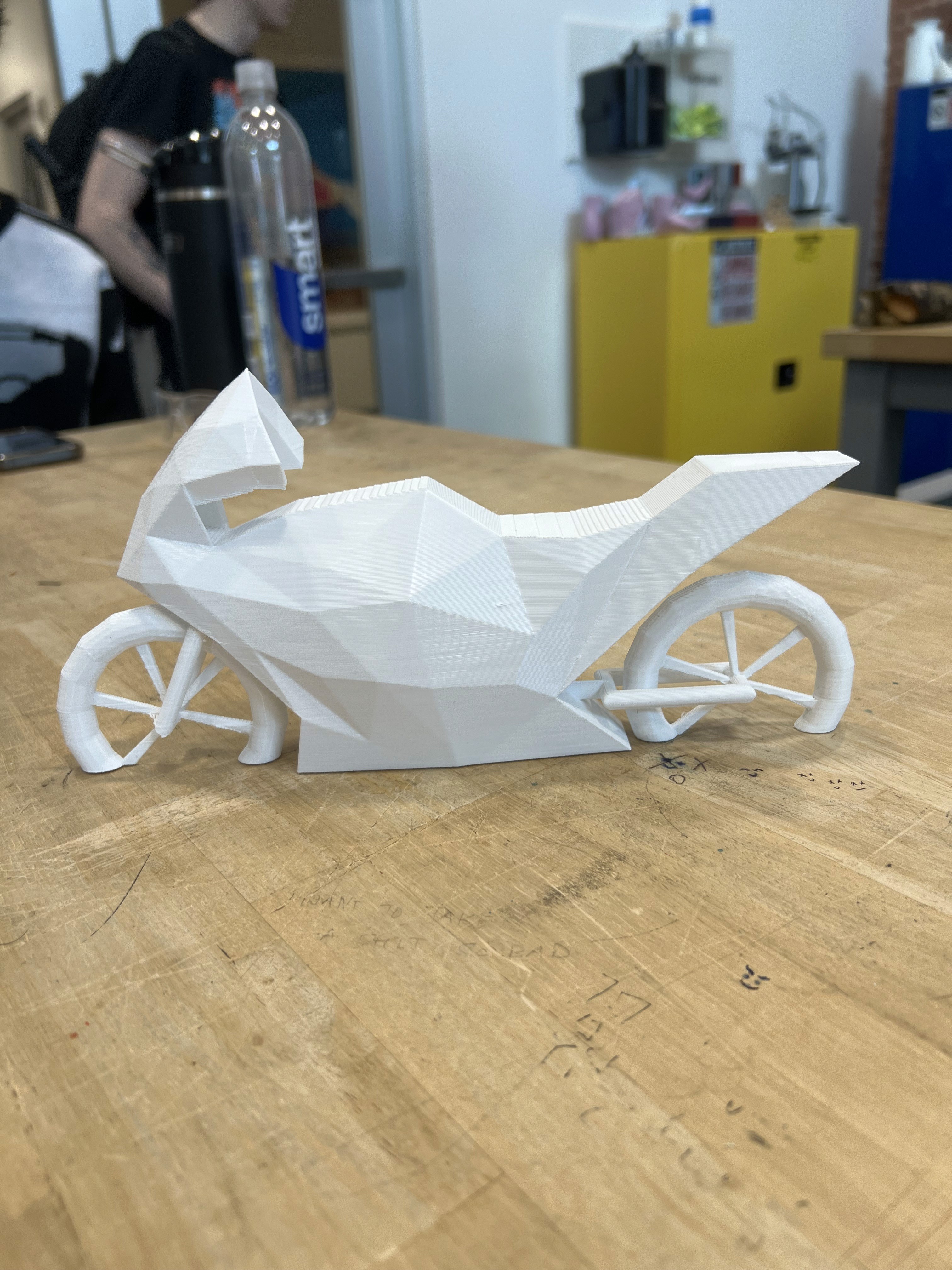
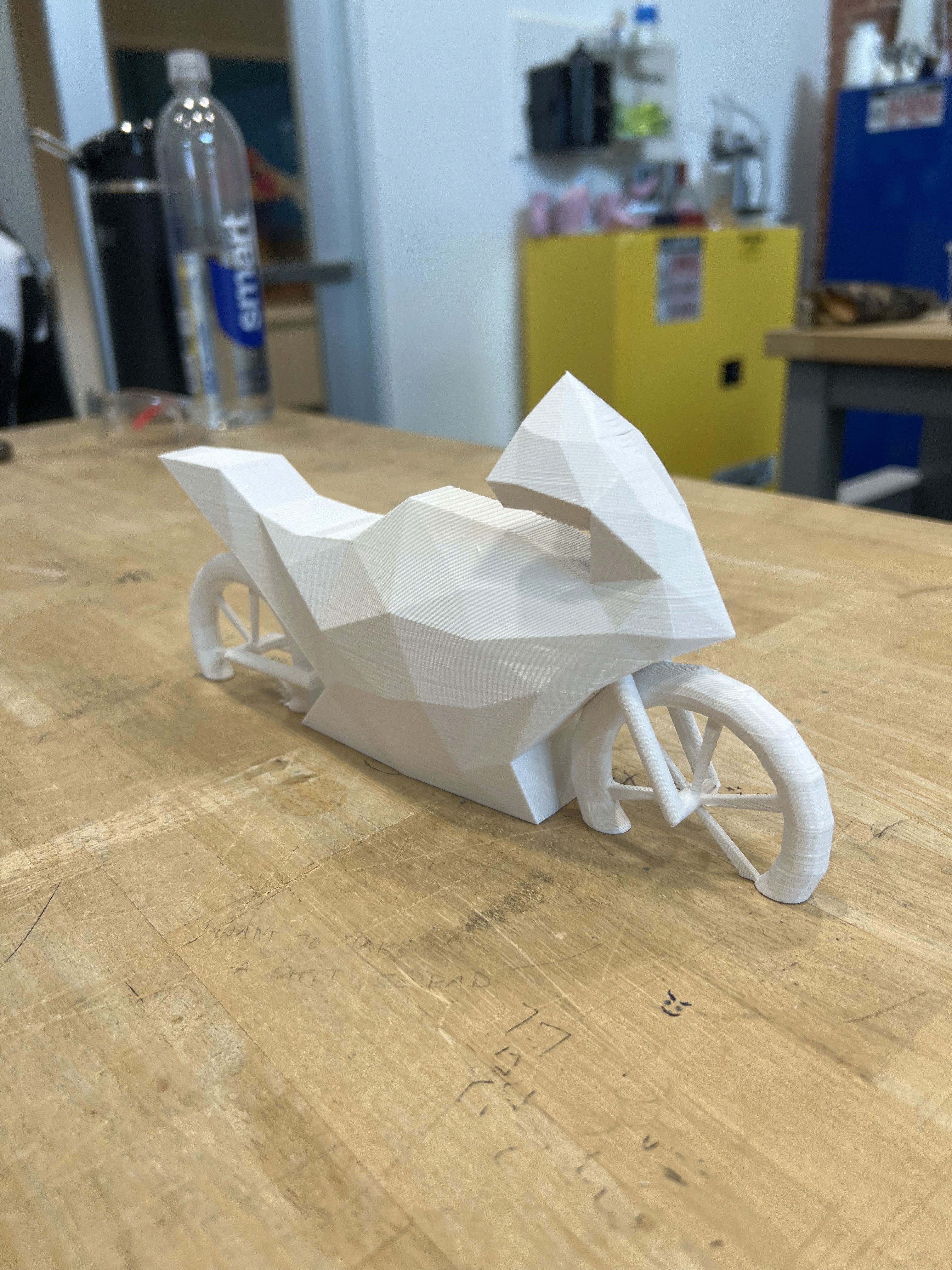
Once we finalized our concept, we collaborated on a Rhino CAD model to define the structure, surface geometry, and paneling. A scaled 3D print was produced to verify proportions and construction feasibility.
Construction & Build process
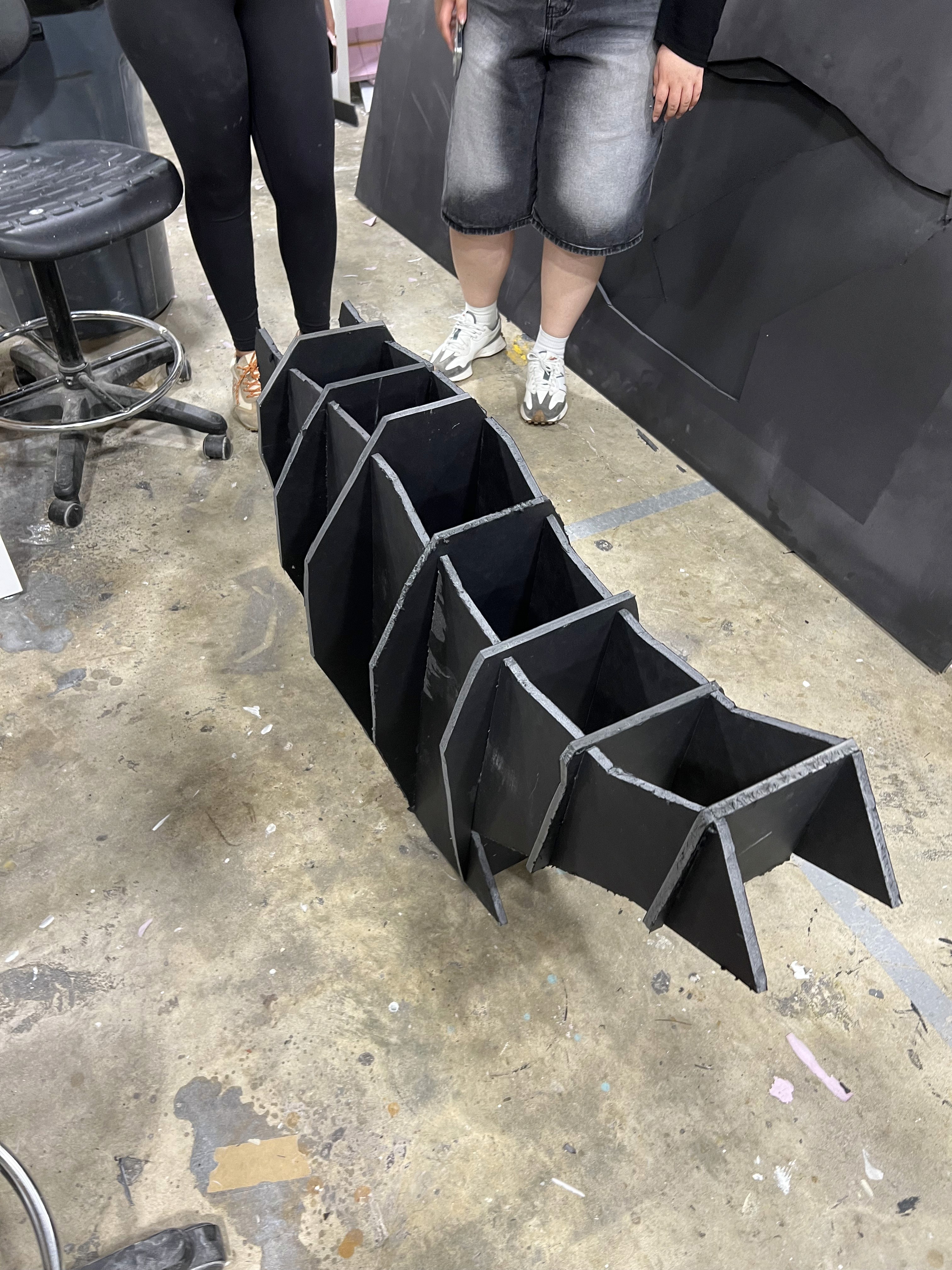
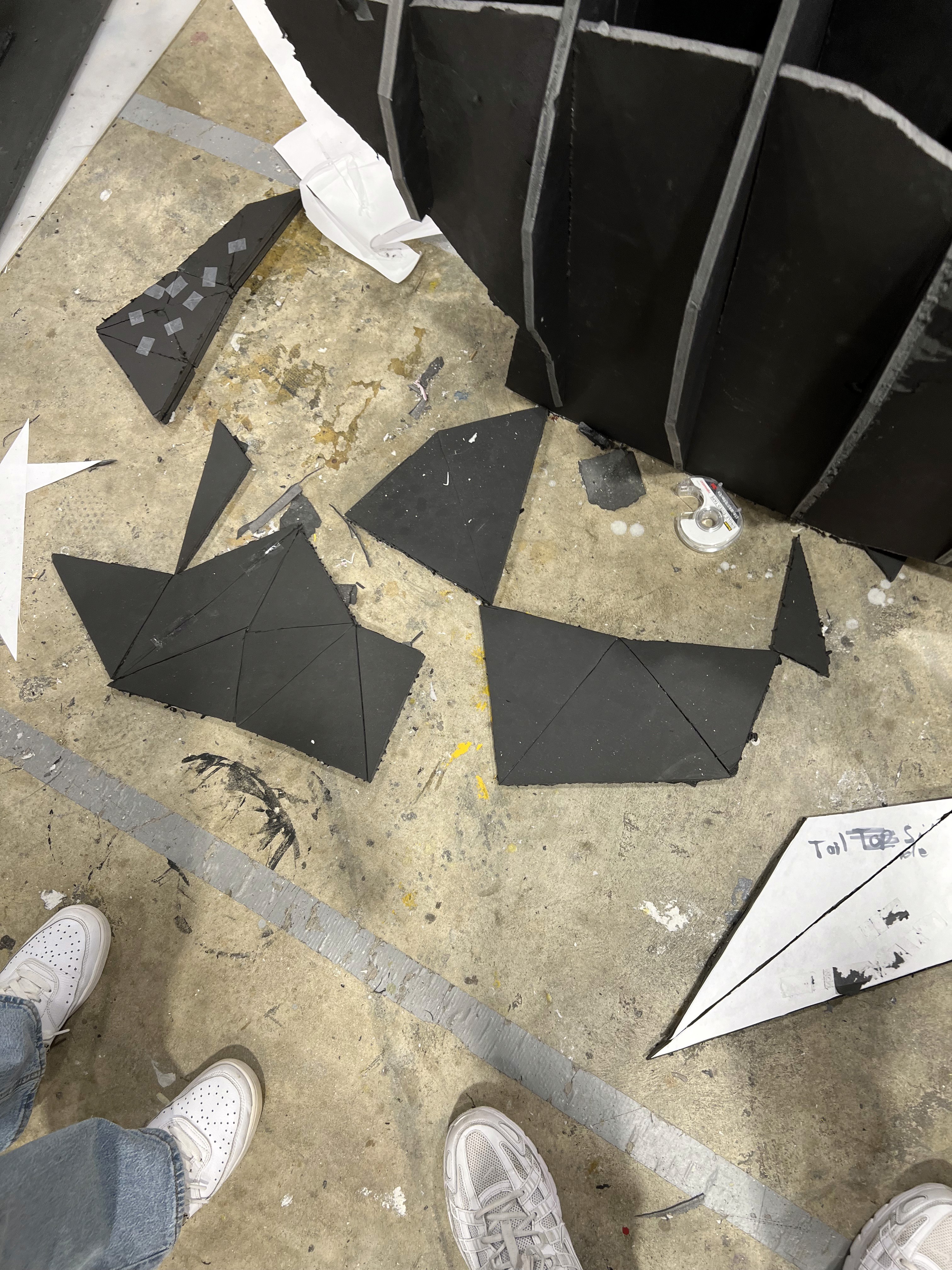
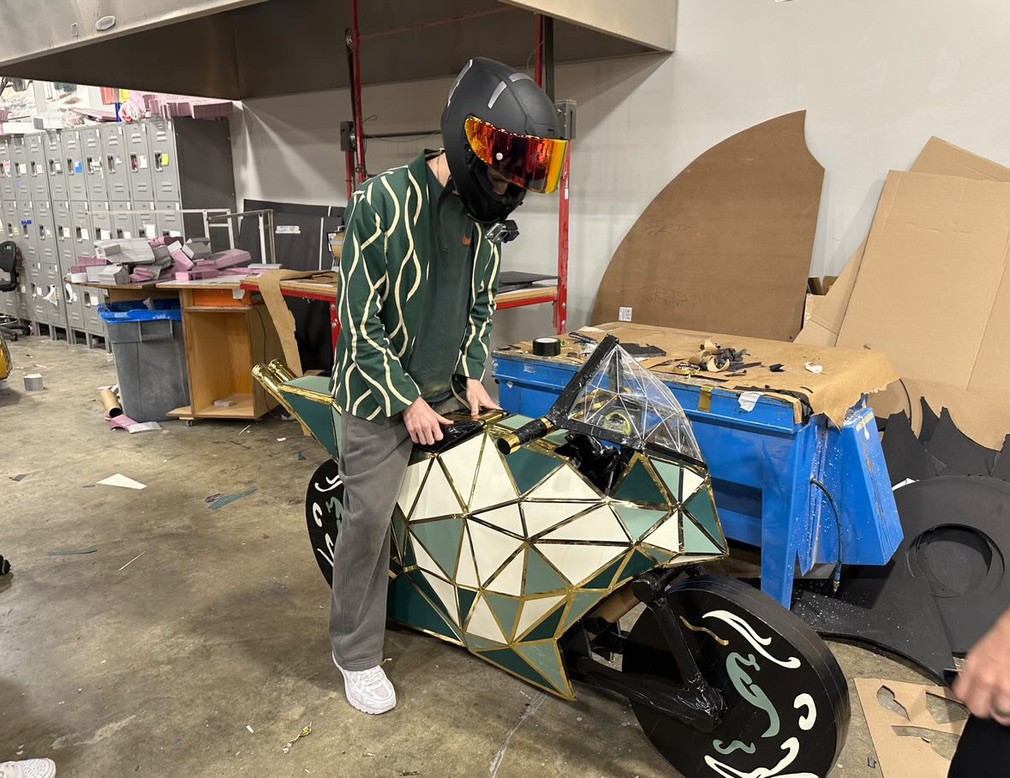
Working together, we built the motorcycle at full scale using foam, cardboard, and plexiglass. I helped cut and assemble panels, build the seat and a functional exhaust compartment with hidden storage, and tested the bike’s usability as the rider. Throughout the build, I problem-solved structural issues and adapted designs in real time, applying an iterative prototyping mindset similar to UX processes.
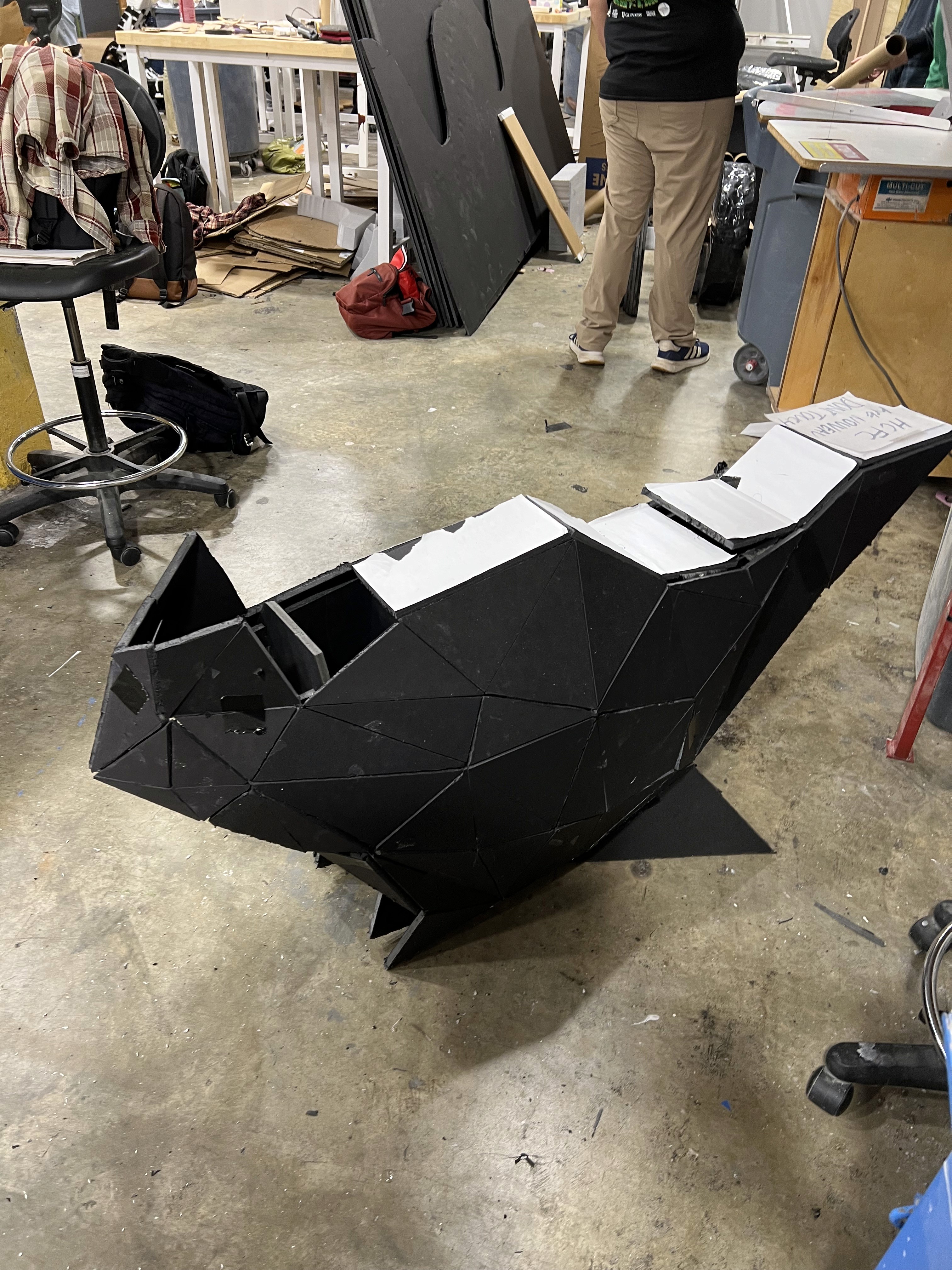
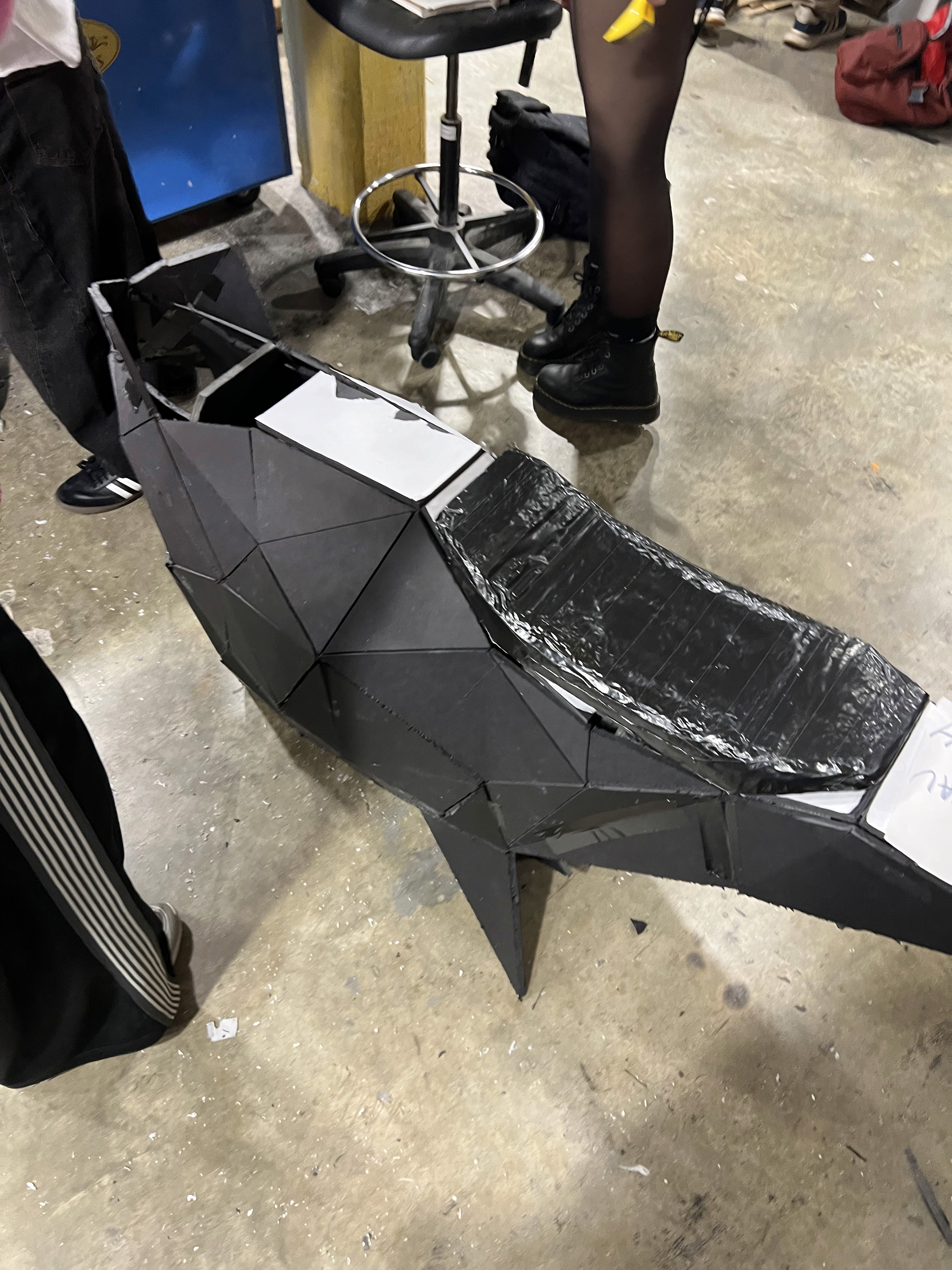
Building With Paper to Explore Depth and Design
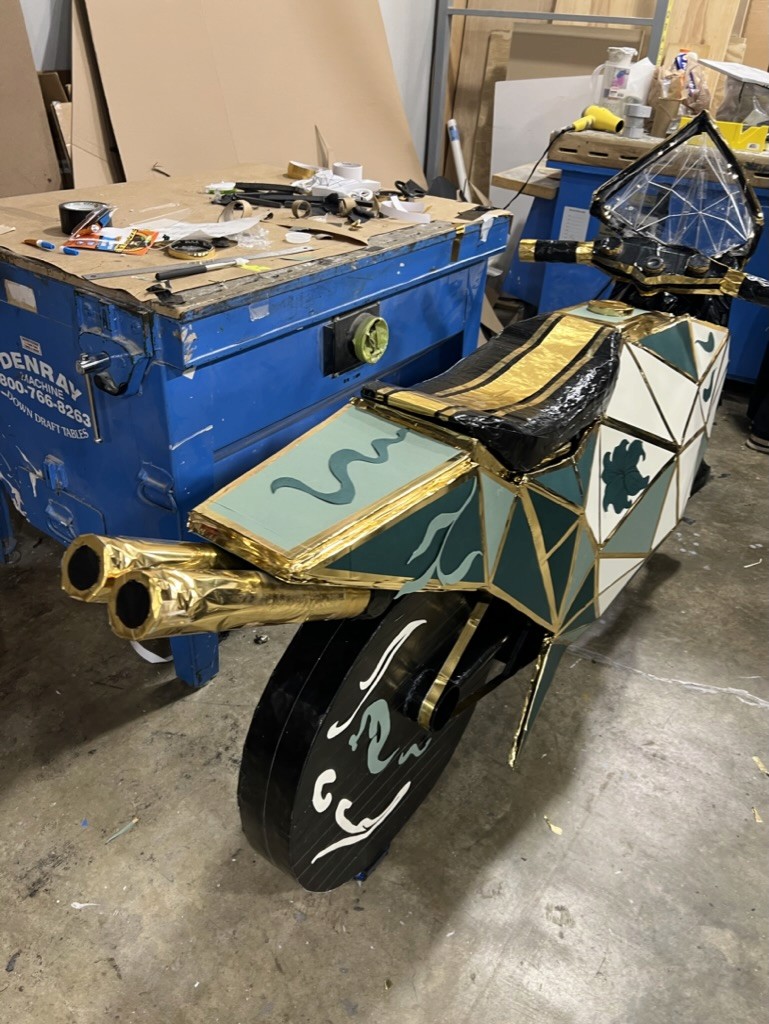
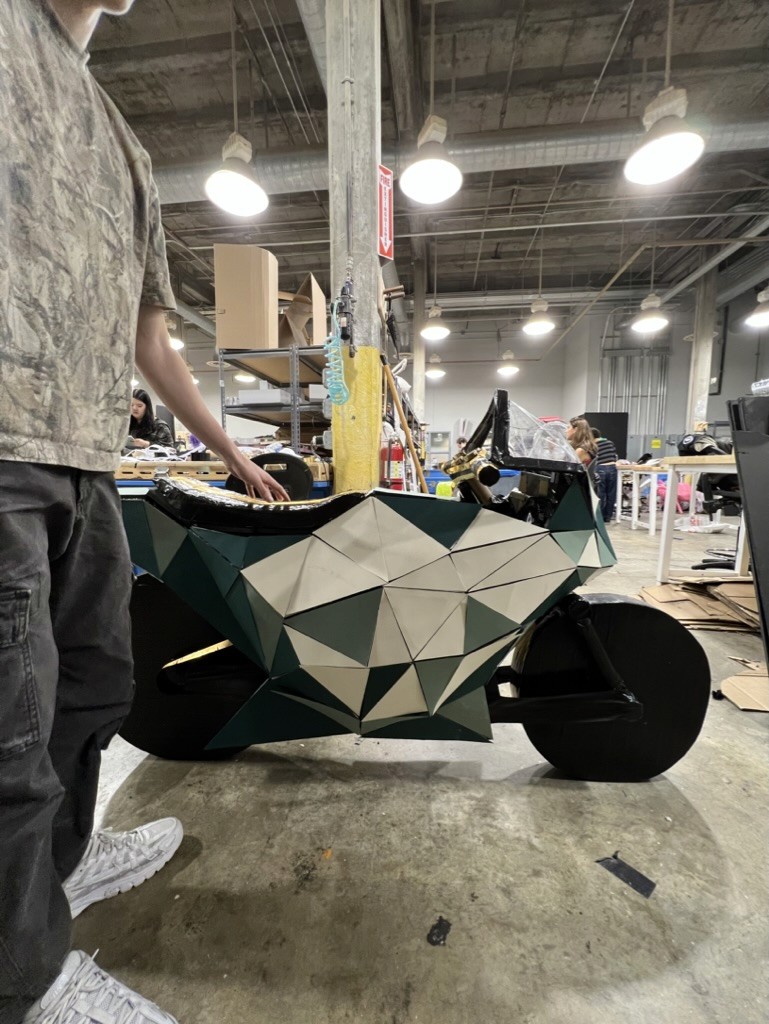
We started by using simple paper and cardstock to visualize form and depth while keeping our overall design inspired by the Art Nouveau theme. Every layer helped us shape the silhouette of the motorcycle, focusing on proportion, balance, and organic flow. The paper allowed quick iteration and lightweight structure while keeping the design flexible, detailed, and true to the elegant, fluid forms characteristic of Art Nouveau.
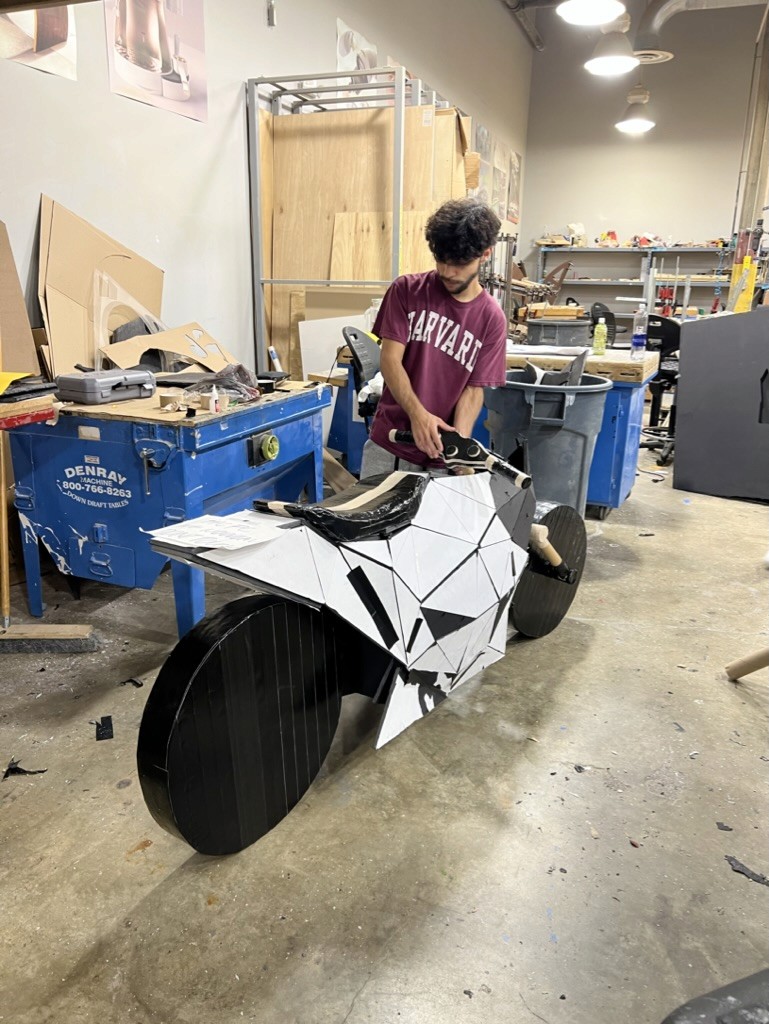
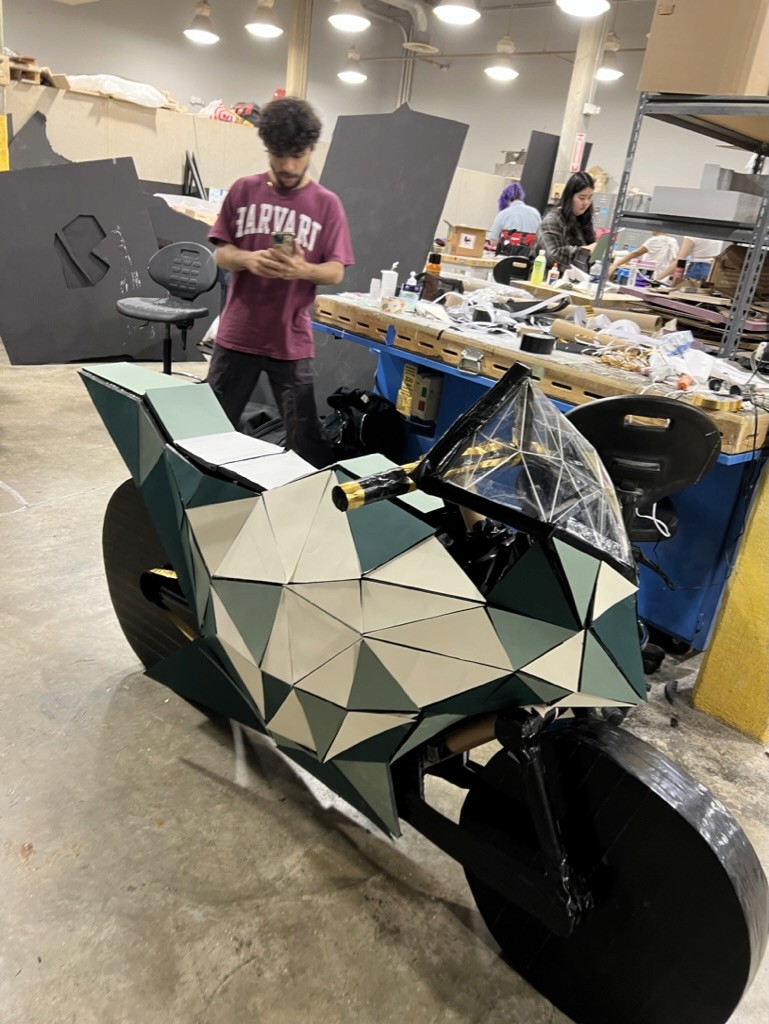
Adding Realistic Parts and Interactive Features
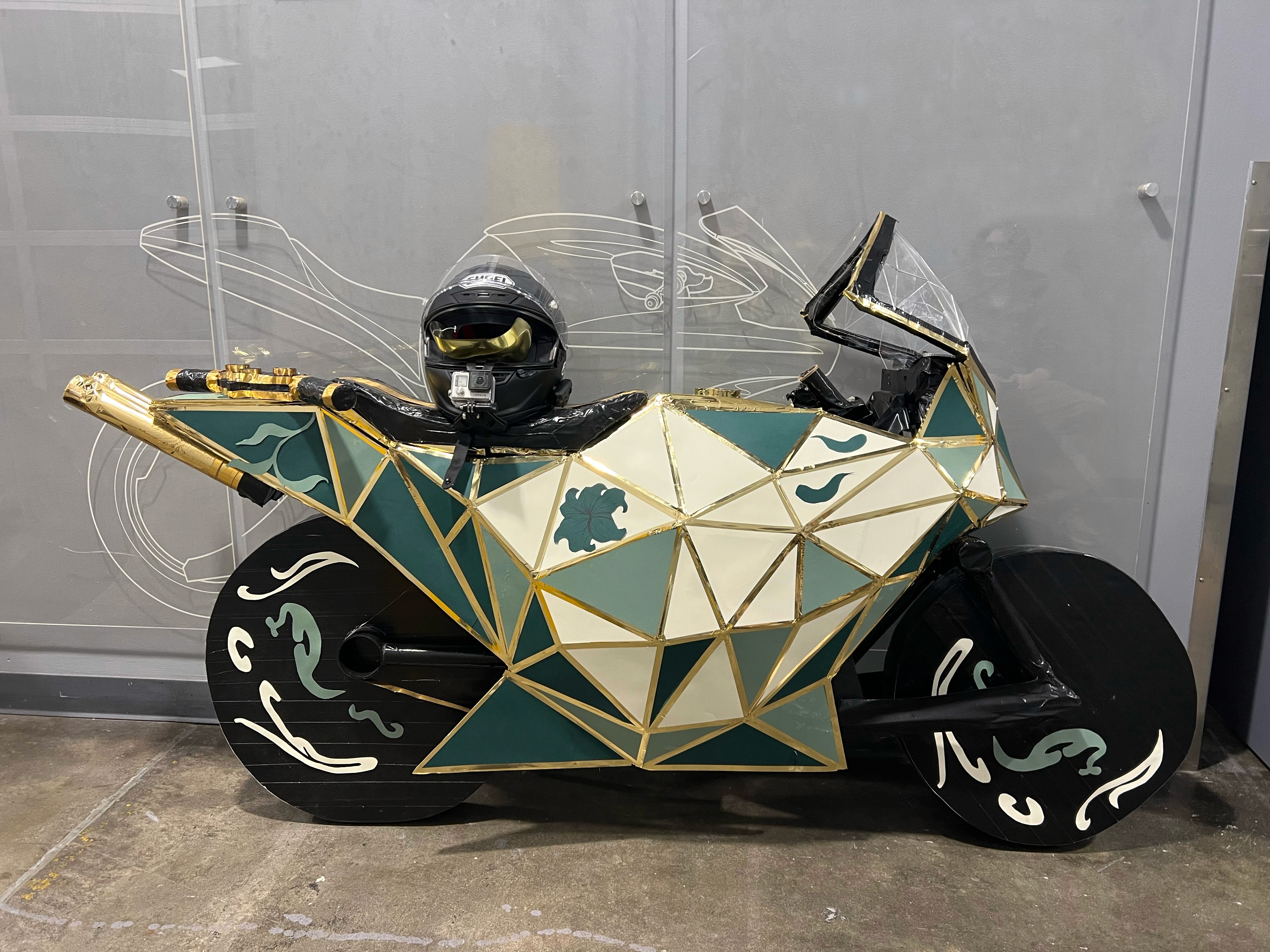
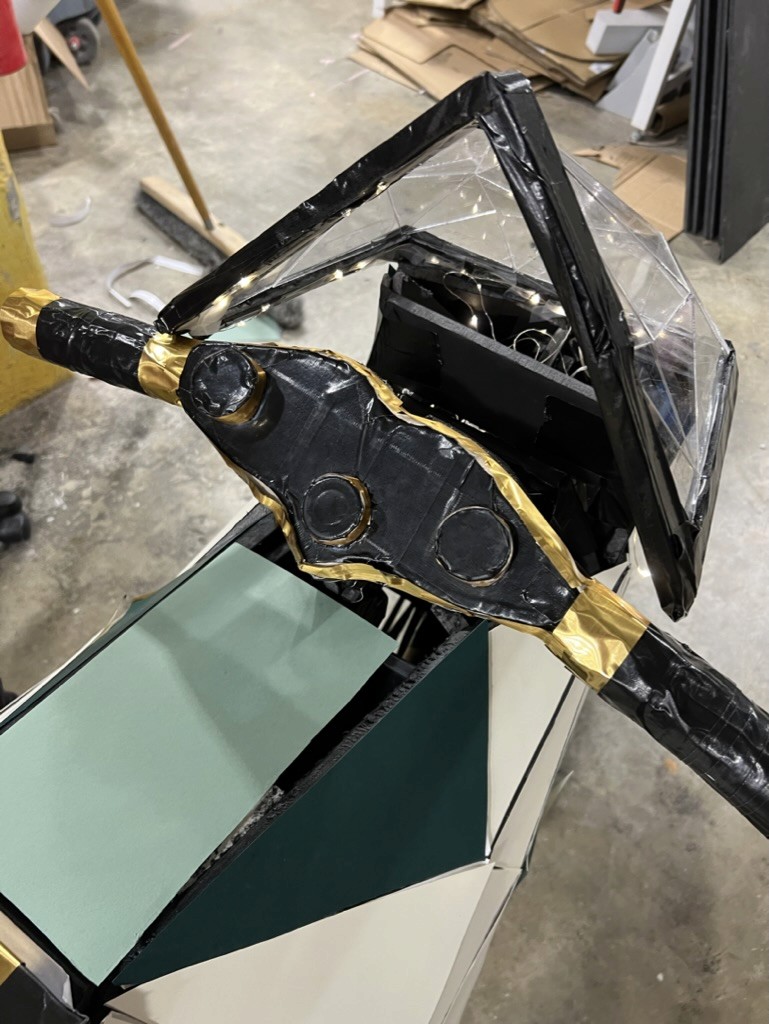
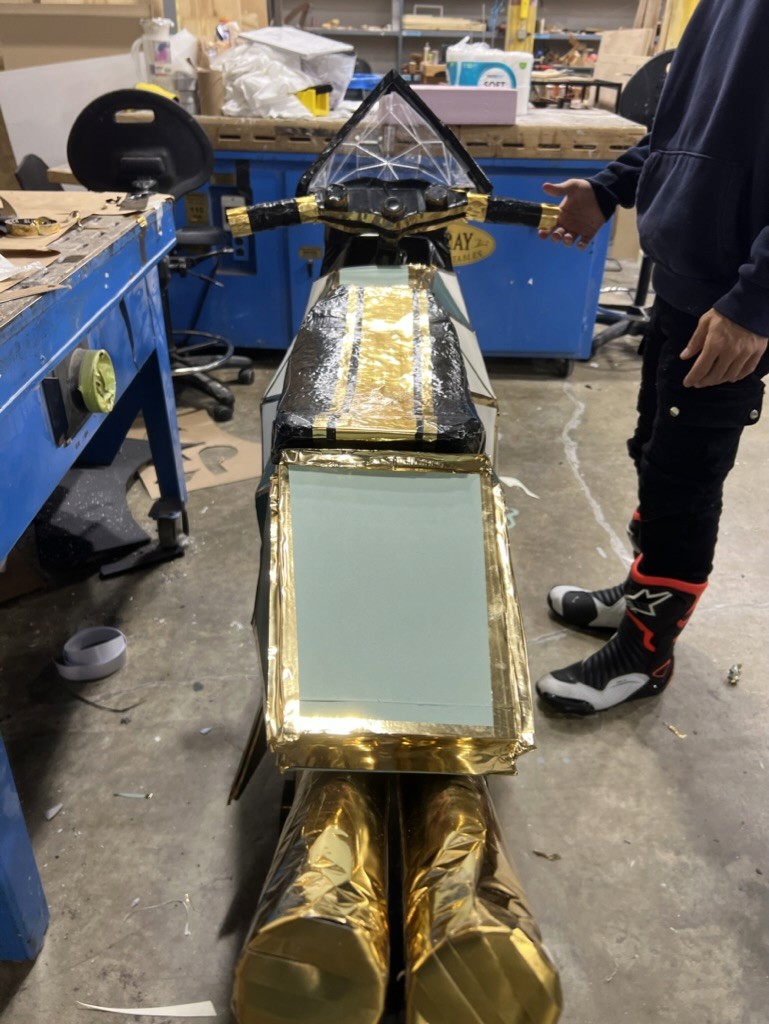
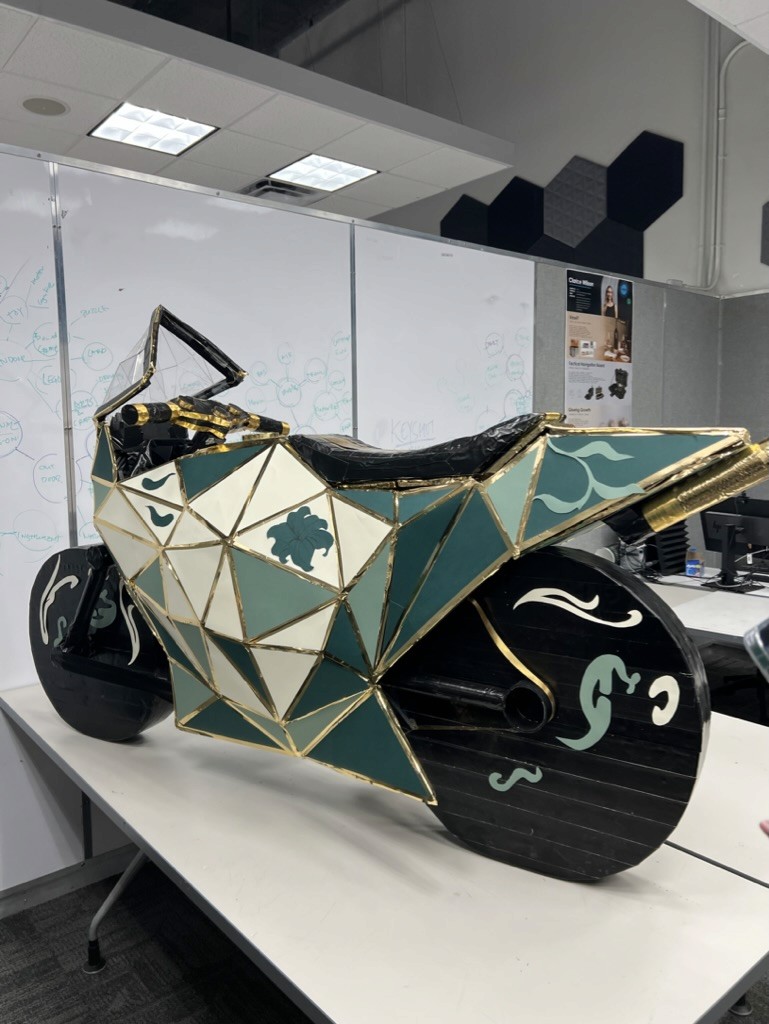
Our team expanded the build by integrating realistic parts like a turnable handlebar with both real and mock buttons, golden exhaust tips, a foam seat, and a small under-seat storage compartment. The exhaust pipes were crafted from cardboard tubes, giving texture and form that represented real mechanical components. Each added feature pushed the prototype closer to a believable, full-scale concept motorcycle that reflected the Art Nouveau influence through its curves and crafted detailing.
User Testing
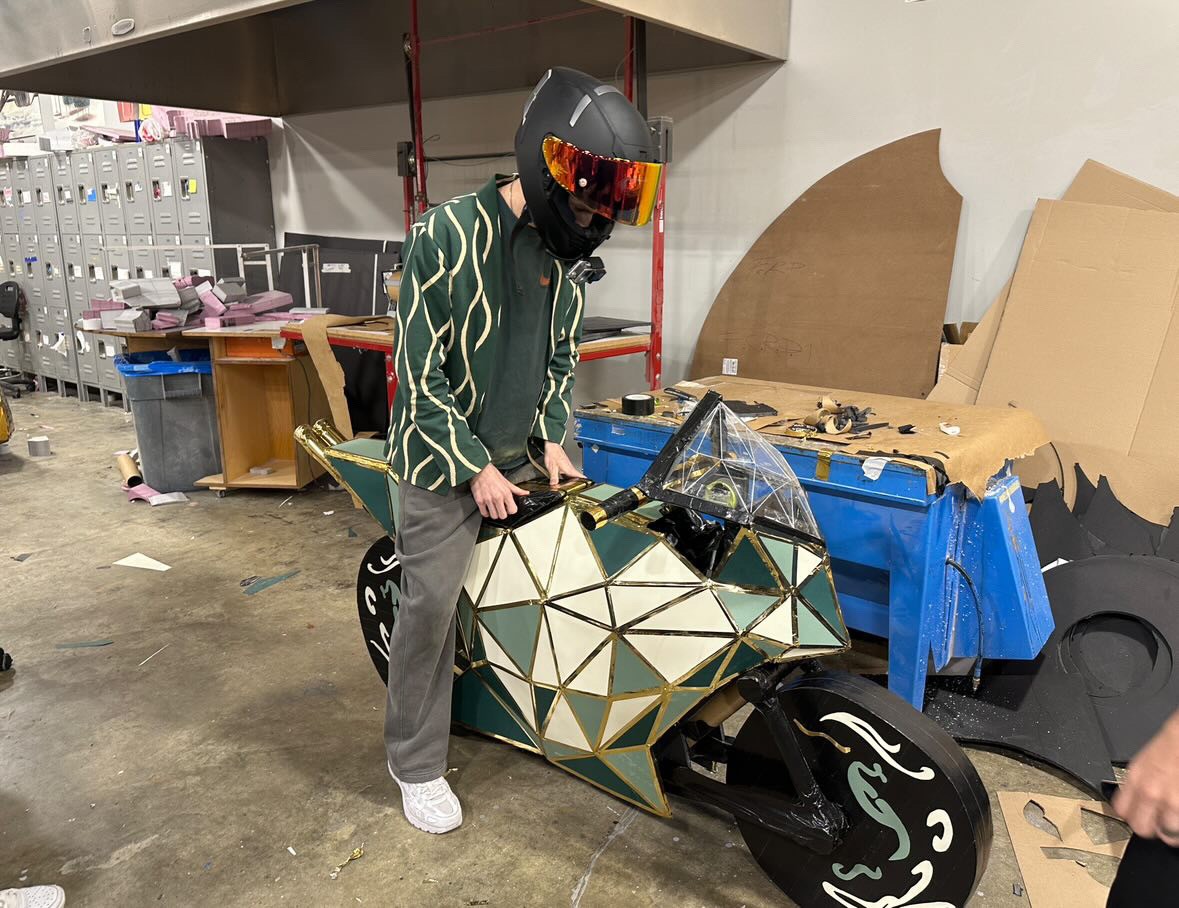
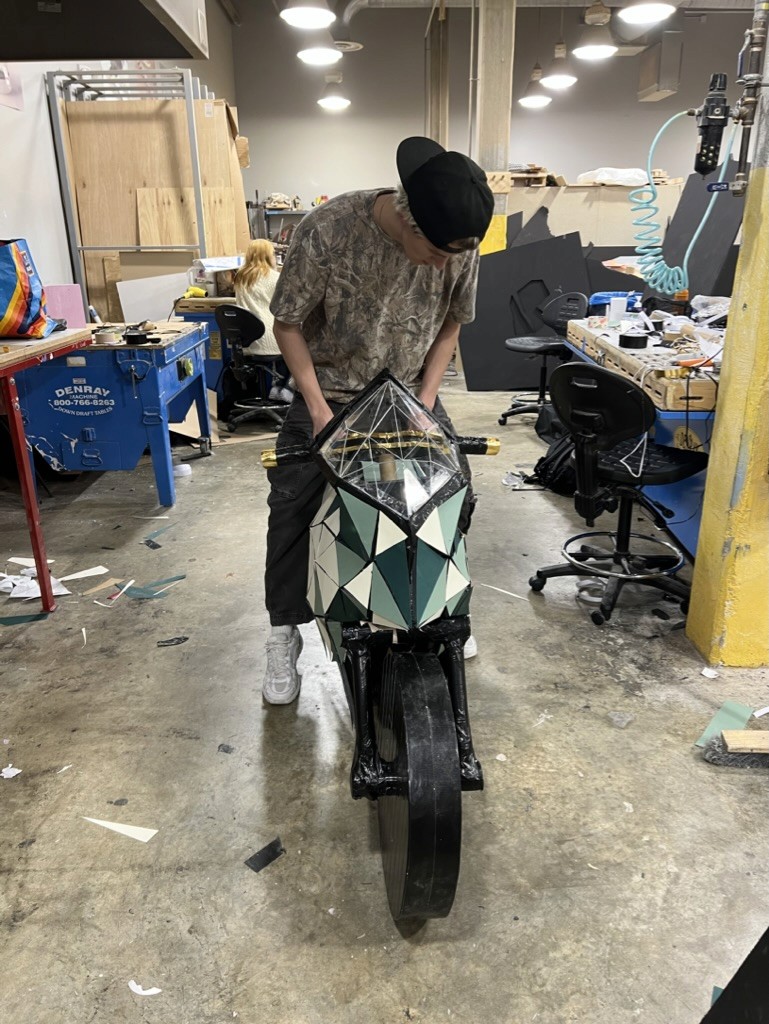
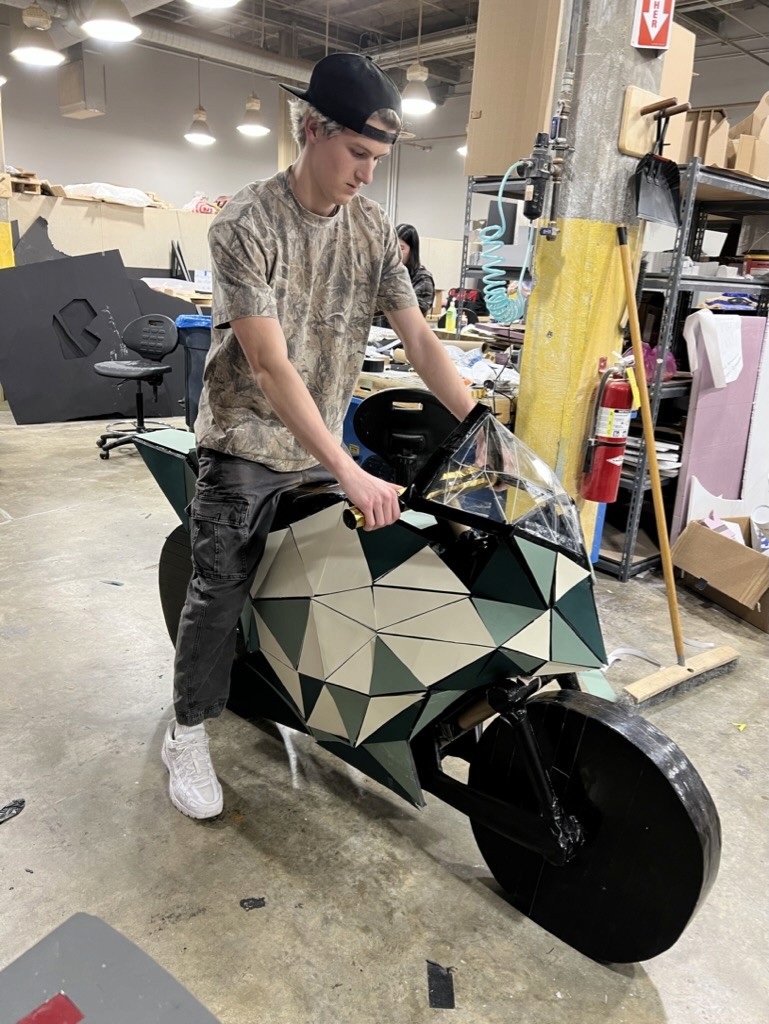
I took the lead on user testing, focusing on UX principles like comfort, accessibility, and realism. I tested the ride height, handlebar reach, and general posture to ensure the experience aligned with what a real rider would feel. Through iterative feedback, I made adjustments to positioning, height, and component spacing to create a balanced, human-centered prototype that felt both functional and immersive.
Final Presentation and Comparison to Real Models
In the final presentation, I demonstrated the finished prototype by riding it and showcasing its functionality. The design captured the elegance and curves of Art Nouveau while remaining stable and visually cohesive, earning positive feedback for creativity and craftsmanship.
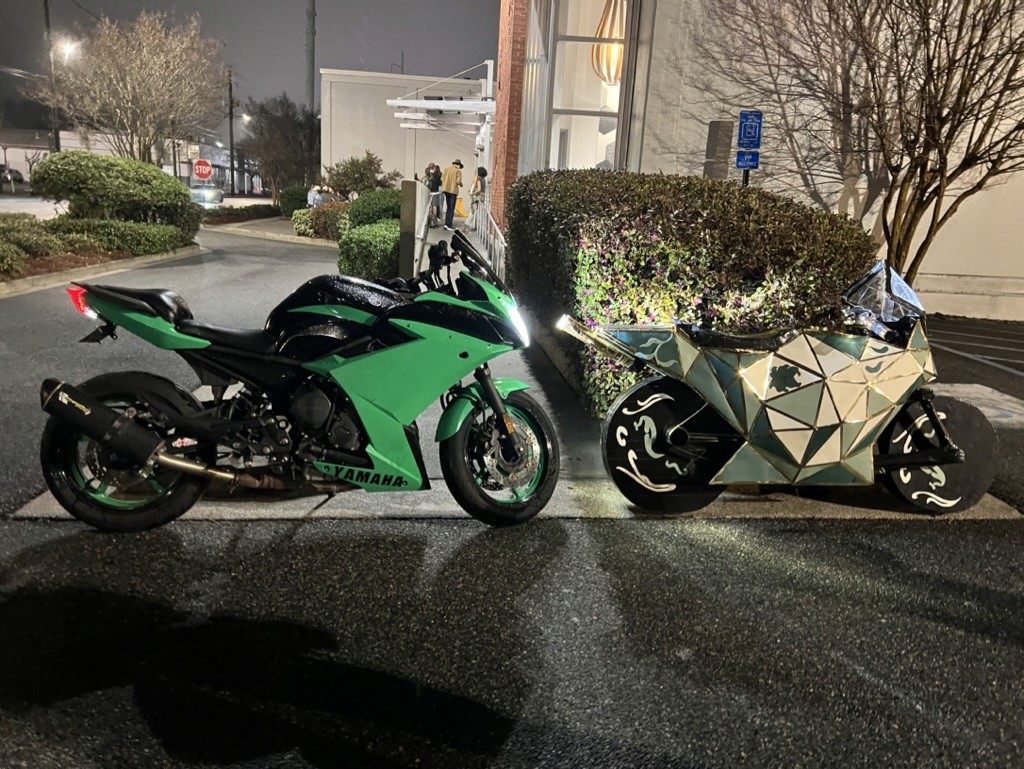
We then placed our paper-built motorcycle next to a real sport bike to emphasize the level of scale accuracy and design intent. The display showed the contrast between concept and reality while highlighting the craftsmanship of our model.
Team Collaboration and Finished Prototype
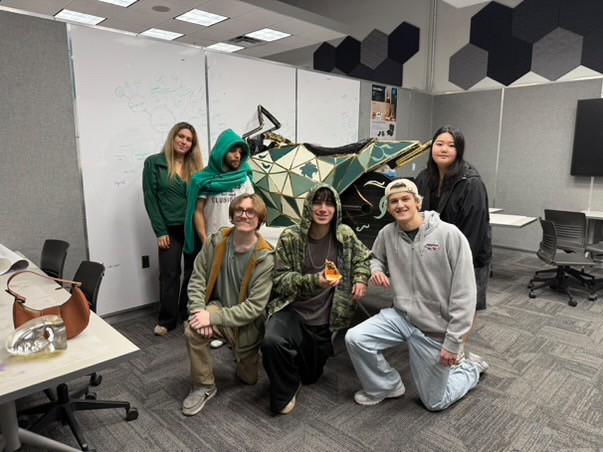
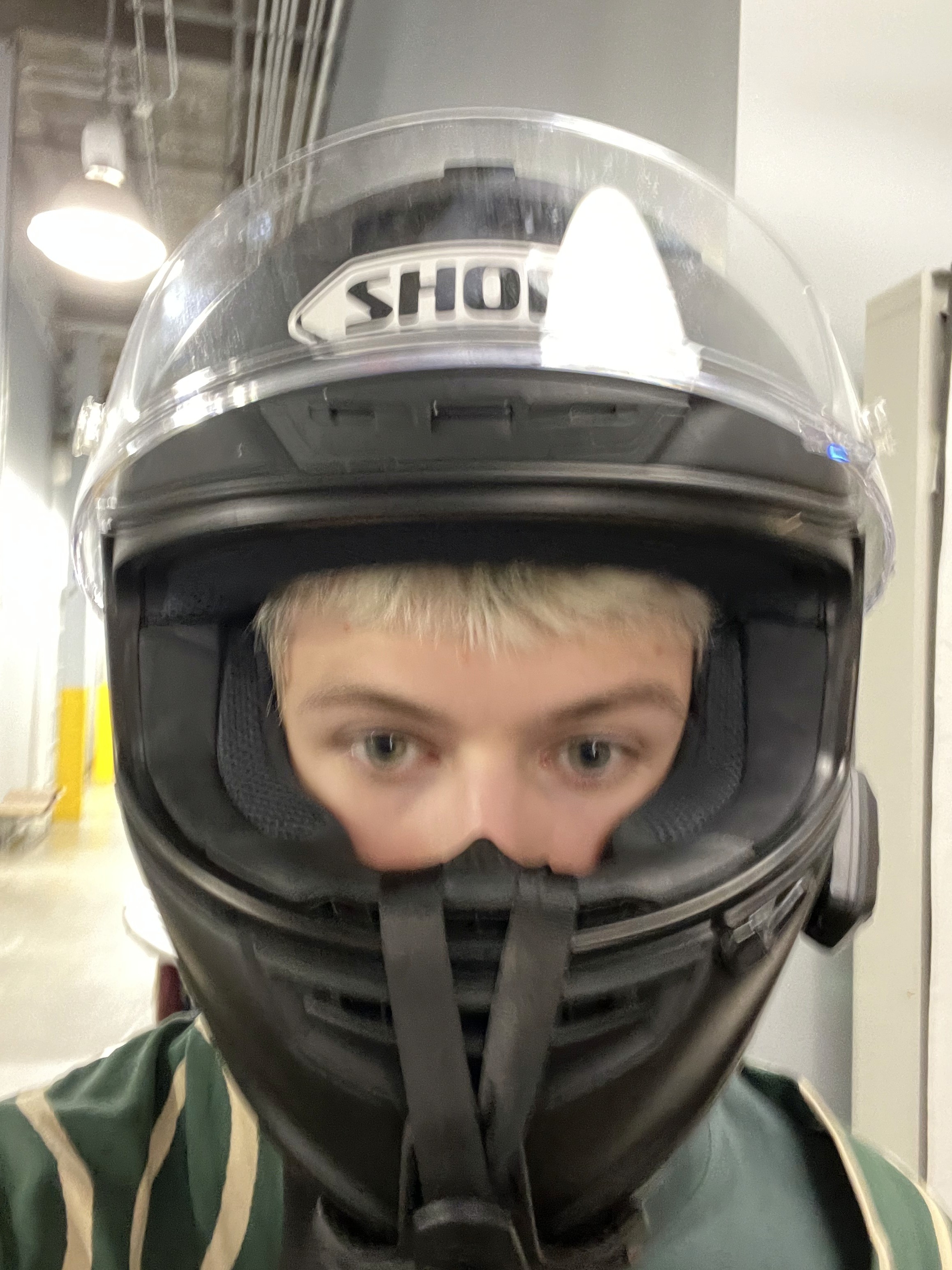
These final photos capture our full team with the completed prototype and the foam motorcycle topped with a real helmet resting on the seat. It represented the collaboration, creativity, and UX-focused process that brought the concept to life from sketch to structure, successfully combining Art Nouveau inspiration with practical design thinking.